Connecting Your Solar System Safely and to Code
Getting solar onto a roof is one job. Wiring it so it ties into your home’s electrical system safely, passes inspection, and actually produces power is another — and that’s the part we handle. Texas Highlands Electric does the electrical side of solar for homes and light commercial properties across Boerne and the Hill Country: interconnection at the panel, inverter and disconnect wiring, dedicated circuits, and the code-compliant connections that make a system reliable. Whether you’re putting in a new array, reconnecting panels after a roof replacement, or rewiring a system that was never done right, we make sure the electrical work holds up.

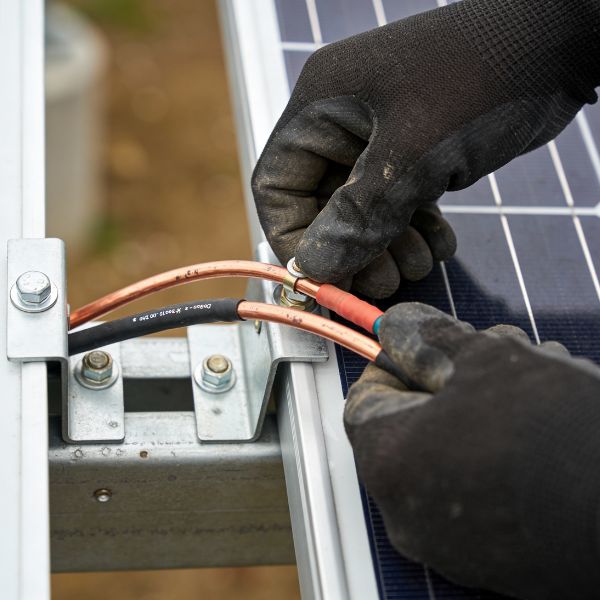
Mounting the panels is the visible part of a solar project. The electrical work is what determines whether the system is safe and whether it passes inspection. That means running conductors from the array to the inverter, wiring the inverter to a disconnect and into your service, protecting every leg with the right breakers, and bonding and grounding the whole system so it’s safe in a fault. Done wrong, you get nuisance trips, underproduction, a failed inspection, or a real fire risk. We focus on that side and get it right the first time.

Not every solar project is the same, but the electrical work usually comes up in a few situations:
If any of that describes your project, that’s where a licensed electrician belongs.
This is the question that decides how straightforward a solar tie-in is. A solar system back-feeds power into your panel, and the main breaker and busbar can only handle so much combined. When the existing main is too large or the busbar is already loaded, the system can’t just land on any open breaker — it may need a smaller main, a line-side connection, or a subpanel to interconnect safely and to code. We check what your panel can actually take before anyone starts pulling wire, so the interconnection is planned right instead of discovered at inspection. If the panel needs work, we handle panel and service upgrades too, so it’s one crew and one plan.
A lot of Hill Country homeowners add solar partly to keep power on when the grid goes down. That only works if the system is wired for it — with a battery, the right transfer setup, and critical loads separated so the essentials stay running. We wire batteries and backup for new and existing solar systems, and if you’re weighing solar storage against a standby generator, we can talk through what each one actually does during an outage.

We start by looking at your panel, your service, and where the system needs to tie in, then explain what the electrical scope involves before any work starts. We coordinate with your solar installer or handle the electrical portion directly, wire everything to code with proper sizing, protection, grounding, and secure connections, and test the system before we call it done. As licensed, insured Texas electricians, we handle the permit and inspection steps where they apply so the interconnection is signed off correctly.
From residential rooftops to commercial solar arrays, our customers rely on Texas Highlands Electric for safe, dependable electrical work. Read their stories here.
Tell us what you’re installing or what’s giving you trouble, and we’ll recommend the safest way to connect it. Contact our team today or call 830-431-4530.
We handle the electrical side — interconnection, inverter and disconnect wiring, circuits, and code-compliant connections. We work alongside your solar installer, or take on the wiring for a system you already have. If you need the panels mounted, we’ll point you to the right partner.
Yes. We regularly wire and interconnect arrays that were mounted by a solar company or a homeowner, including reconnecting panels after a roof replacement. We verify the whole electrical path is safe and to code before energizing.
It depends on your main breaker size and how loaded the panel already is, because solar back-feeds power into it. Sometimes an open breaker is all it takes; other times it needs a subpanel, a line-side connection, or a panel upgrade. We check before starting so the interconnection is planned correctly.
Yes. We wire batteries and backup for new and existing solar systems, including the transfer setup and separating critical loads so the essentials keep running when the grid is down.
In most cases, yes. Utility interconnection and new solar wiring typically require a permit and inspection. We handle those steps where they apply so the system is approved and signed off correctly.
We serve Boerne and the surrounding Hill Country, including Bexar, Kendall, Kerr, Bandera, and Gillespie counties.