
Texas Hill Country
EV Charger Installation FAQs
Texas Highlands Electric provides EV Charger Installation for homeowners and property managers across the Texas Hill Country, including Bexar County, Kendall County, Kerr County, Bandera County, and Gillespie County, Texas. If you’re planning a Level 2 charger in a garage, carport, or exterior location, this page explains what affects capacity, placement, permitting, and install timeline.
EV Charger Installation Questions
Do I need a Level 2 charger, or is a standard outlet enough?
A standard outlet can work for low daily mileage, but most homeowners choose a Level 2 charger for faster charging and more predictable overnight recovery. The right choice depends on your driving habits, vehicle requirements, and where the vehicle is parked.
What does an EV charger installation include?
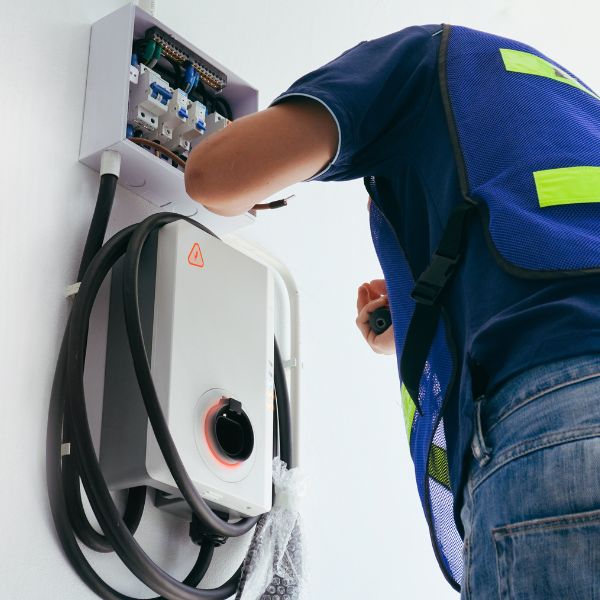
Most installs include evaluating panel capacity, selecting the charger location, running a dedicated circuit, installing the appropriate breaker and wiring, mounting the charger, and testing operation. The exact scope depends on distance from the panel, access for routing, and whether upgrades are needed.
Does an EV charger require a dedicated circuit?
In most cases, yes. A dedicated circuit helps ensure the charger has correct protection and doesn’t share load with other high-demand equipment. This also reduces nuisance tripping and overheating concerns.
Will I need a panel upgrade to install an EV charger?
Not always. Some homes have enough capacity and breaker space, while others need changes before adding a large continuous load. If your panel is full or capacity is limited, Panel Service & Upgrades may be the first step before adding EV charging.
How do you determine the right charger amperage?
Amperage selection depends on the vehicle, charger capability, available electrical capacity, and what makes sense for your daily charging needs. Bigger is not always better if the electrical system or demand profile doesn’t support it.
How far can the charger be from the electrical panel?
Distance is often possible, but it can affect routing complexity, materials, and install time. Garages with attic access are usually simpler, while finished spaces, masonry walls, and long exterior runs can require more planning.
Can you install an EV charger outdoors?
Yes, with the right equipment and weather-rated installation. Outdoor placement should account for safe routing, mounting surface, protection from damage, and appropriate device ratings for the environment.
Can an EV charger be installed on a carport or detached garage?
Often, yes. The scope depends on how power is fed to the structure and whether the existing feed can support the added load. If the structure is already near capacity, upgrades may be needed before adding charging.
Do EV chargers require permits and inspections?
Sometimes. Requirements depend on location, scope, and local jurisdiction. Permit and inspection needs should be confirmed during the estimate so the timeline is predictable.
How long does an EV charger installation take?
Many straightforward installs can be completed in one visit once scope is confirmed. Install time can increase when routing is complex, a detached structure is involved, or service equipment upgrades are required. Permits and inspections can also affect scheduling.
What should I do before scheduling an EV charger install?
Know where you want the charger mounted, confirm vehicle parking location, and decide whether you want hardwired or plug-in (if applicable). If you already purchased a charger, have the model information available so the installation plan matches its requirements.
Can you install a 240V outlet instead of a wall charger?
Sometimes that’s an option, depending on the charger and how you plan to use it. A site evaluation helps determine which approach fits the vehicle, the location, and the safest installation method.
What are common mistakes homeowners make with EV charger installs?
Most issues come from undersized wiring, poor placement, trying to share circuits, or installing equipment without confirming panel capacity. A correct installation starts with capacity review and a dedicated circuit plan.
Why Texas Hill Country Homeowners Use Texas Highlands Electric for EV Charging
EV charging is a continuous load, so capacity and protection have to be correct. Texas Highlands Electric focuses on clear evaluation, proper circuit design, and realistic expectations on routing, placement, and any permit or inspection steps that may apply. The goal is an installation that charges reliably, avoids nuisance trips, and fits the property without shortcuts that cause problems later.
Related Electrical Services
If your charging plans affect your electrical capacity or you’re already seeing circuit issues, troubleshooting and panel planning may be part of the same conversation.
Panel Service & Upgrades FAQs
If new lighting plans require added circuits, breaker space, or capacity review for major new loads.
Troubleshooting & Repairs FAQs
If you’re seeing tripping, flickering, dead circuits, or intermittent power, troubleshooting confirms whether the issue is at the panel or within the circuit.
Generator Installation FAQs
Generator installs typically involve service equipment review and transfer equipment planning that ties into the panel setup.
Related Pages
Texas Highlands Electric FAQs
View general questions on estimates, scheduling, permits, and service areas.
EV Charger Installation
EV charging often requires confirming capacity, breaker space, and load planning before installation.
What to Do Next
To plan an EV charger install or confirm capacity for Level 2 charging, call Texas Highlands Electric at (830) 431-4530 to schedule an on-site evaluation and get a clear scope and timeline.