
19 Oct Is An Alamo Heights EV Charger As Simple As Plugging It In?
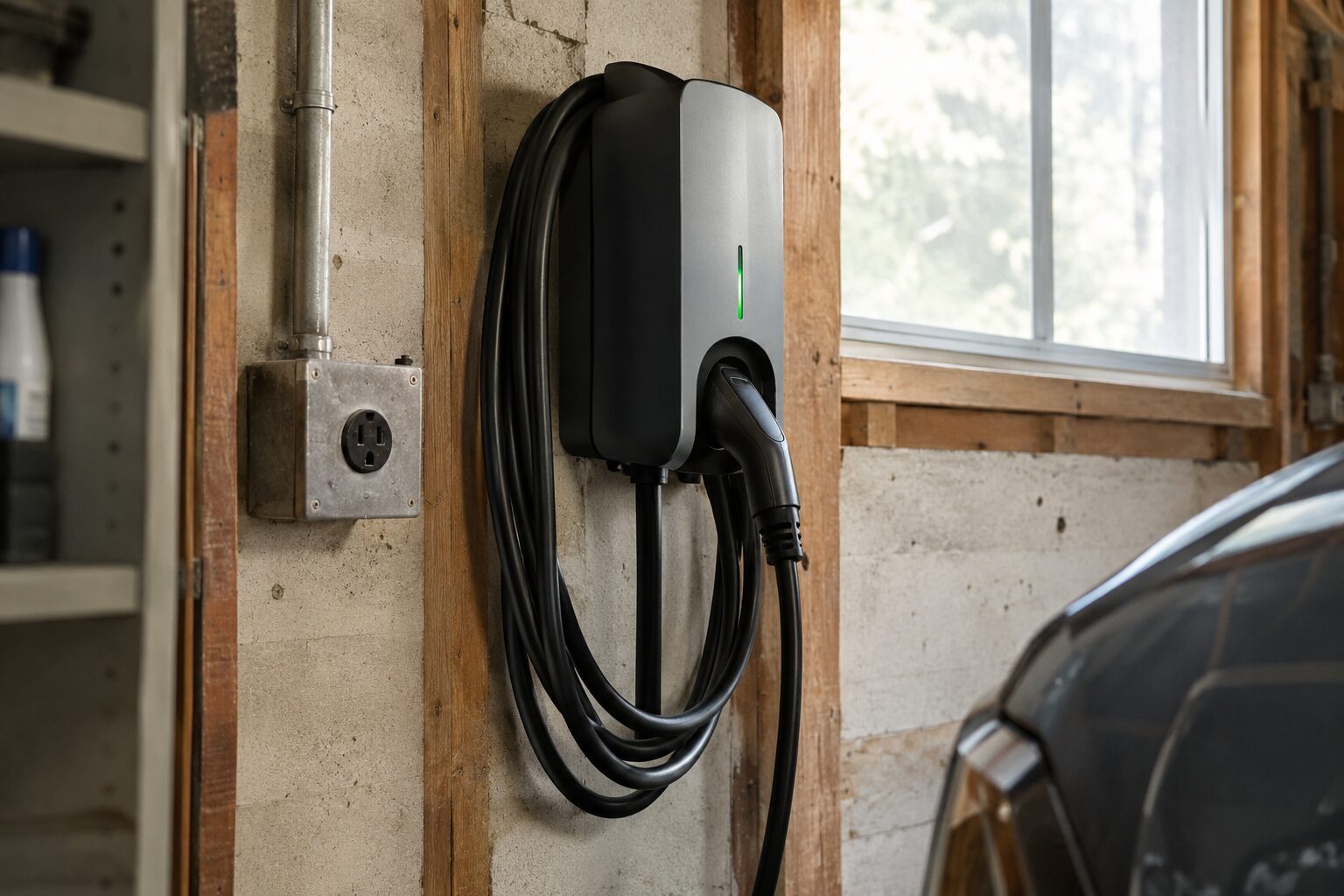
Most EV buyers sort out the car first and the garage second, which is how an Alamo Heights EV charger project often starts with a surprise. A standard wall outlet adds only a few miles of range an hour, barely enough to keep up with daily driving. A Level 2 charger runs on a dedicated 240 volt circuit, the same kind a dryer or range uses, and refills most vehicles overnight.
What Size Breaker Does A Level 2 Charger Need?
The circuit has to be sized from the panel all the way to the charger, with its own breaker. Charging counts as a continuous load, so the breaker runs about 25 percent above the charger’s rating: a 32 amp charger takes a 40 amp breaker, a 40 amp charger takes 50, and a 48 amp charger takes 60. That’s a big ask of a panel that’s already close to full, which is why the sizing conversation has to happen before the equipment is purchased. Sharing a circuit with other garage outlets is the shortcut that causes trouble, usually a tripped breaker the night before a long drive.
Some chargers plug into a 240 volt outlet like a dryer would, and others are hardwired. The right one depends on the charger you already own or plan to buy.
When a panel can’t spare that much capacity, a full service upgrade isn’t always the only route. A load management device can let the charger share capacity with the rest of the house by backing off when the dryer or oven runs. We run the load calculation first and show you which route fits.
Planning An Alamo Heights EV Charger Around An Older Garage
Alamo Heights is a small city tucked inside Loop 410 just off Broadway, and plenty of its housing dates from the 1920s through the 1940s. Garages were often added later, detached from the house, or converted from a carriage house. So the run from the panel to the car can be long, the panel may already be full, and the walls may be plaster. We covered the capacity side in a recent Alamo Heights panel upgrade, and an EV is often the reason that conversation starts.
Fishing a new circuit through original plaster or a finished garage ceiling takes a different approach than running wire through open studs, so we plan the route before we cut anything. Starting with the panel keeps the project honest: if there’s room for the new breaker, the rest is routing, and if there isn’t, we know before the charger is ordered.
If you haven’t bought a charger yet, check the amperage rating and cable length first, or send us the model and we’ll confirm the circuit it needs.
Where The Charger Goes
The location depends on where the car actually parks. Mounting height and cable length matter, so we ask how you pull in and put the charger where you’ll use it every day. A charger also needs a cable that reaches the port without stretching across a walkway, and a spot where it won’t get backed into. Wall mounting at a height you can reach from the driver’s side solves both problems.
Attached Vs Detached Garage
A detached garage, a carport, and an open driveway each call for a different way of routing and protecting the circuit. For a detached garage, the circuit usually travels underground in conduit or along an exterior wall, and we pick the route that avoids mature tree roots and existing sprinkler lines. Outdoor mounting calls for equipment rated for the weather, and an enclosed garage is more forgiving. Homeowners in Kerrville have gone through the same checklist, including in an EV charger install in Kerrville, and the fundamentals hold even though every garage is a little different.
WiFi And Charger Apps
Most chargers offer scheduling and app control but rely on WiFi reaching the garage. A detached garage often needs a network extender or a wired connection, so we raise that during planning, along with whether you want the charger to follow an off-peak schedule.
Installation Day And Running Costs
Most straightforward installs take a single day. We run the dedicated circuit, mount the charger, and test it under load before we leave. If the panel needs more capacity first, that adds a step we’d rather catch at the planning stage than after the charger is on the wall. Adding a second EV later is simpler if the panel has room for it today. Permit and inspection requirements apply to the circuit, and we handle that coordination so the install is documented properly, which matters for your insurance and for the day you sell.
Charging overnight usually costs less per mile than gasoline, and less still off peak if your plan has time-of-use pricing. CPS Energy has offered EV rewards for customers with smart Level 2 chargers, and the details change, so check its EV page before you buy a unit. We don’t handle that paperwork, but we’ll point you to the current programs.
Our EV charger installation service starts with a look at your panel and garage, and our EV charger FAQs cover the basics. Contact Texas Highlands Electric and we’ll lay out what your house needs.