


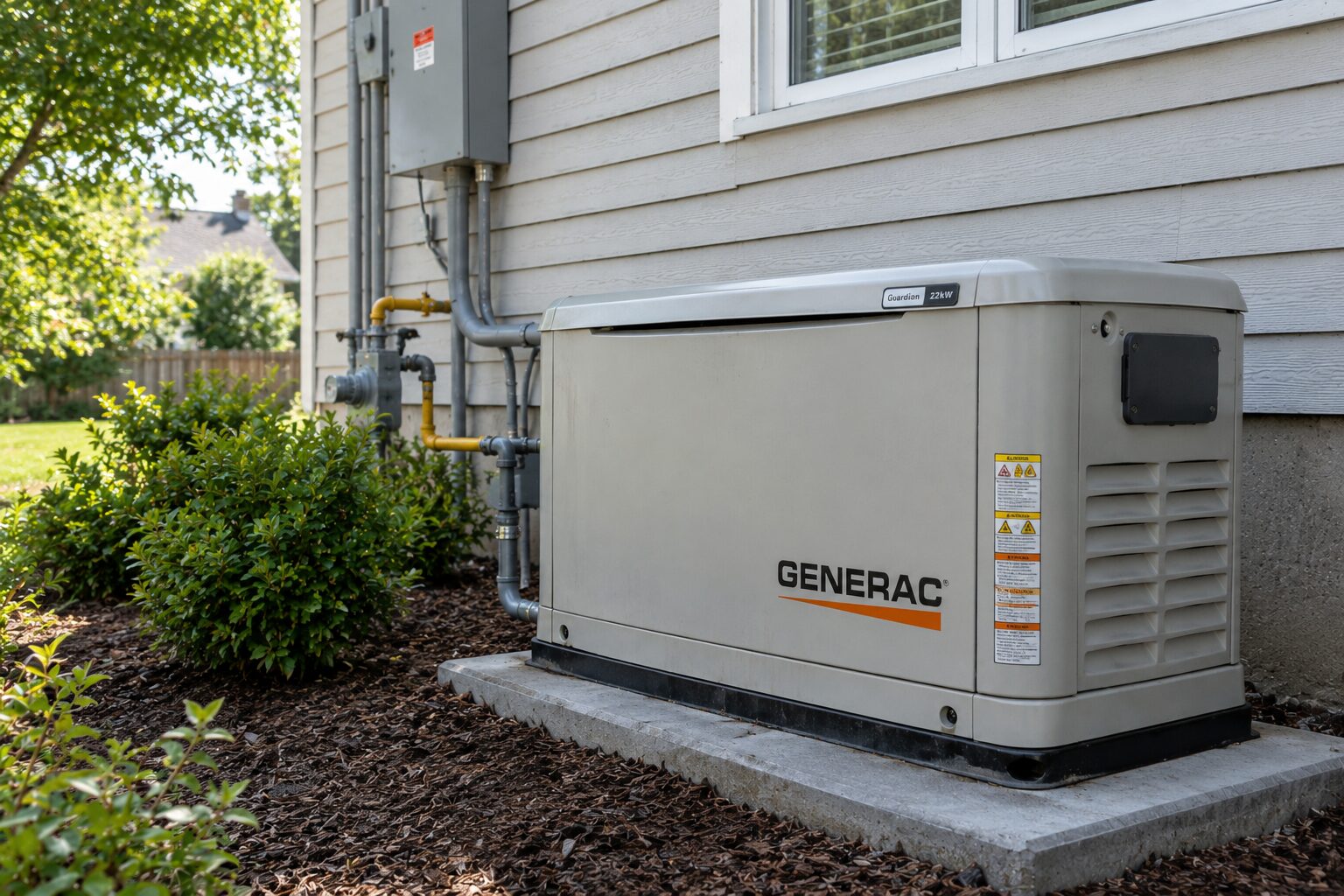
21 Oct Sizing A Standby Generator Stonewall Properties Can Count On
How much generator is enough? Ask three neighbors and you’ll get three numbers. The right standby generator Stonewall properties need comes from adding up what actually has to keep running, not from a rule of thumb.
The calculation starts with a list of everything you’d hate to lose in a long outage, from the well pump and refrigeration to the AC, the shop, and the internet router. Each item gets a running wattage and a starting wattage, and the total sizes the unit.
Plenty of owners start with a figure they heard somewhere, often a flat 20 kilowatt unit for any house. That ignores what your property runs. It leaves you short in an outage or paying for capacity you never use, and both are expensive to fix once the unit sits on its pad. A small cottage in the peach orchards and a working ranch house with a shop, a well, and a barn full of equipment shouldn’t get the same answer.
What Your Standby Generator Stonewall Property Needs To Carry
Properties around Stonewall, from the orchards and vineyards to the ranch land near the LBJ Ranch, mix household loads with property equipment: central AC, refrigeration, and lighting, plus well pumps, shop tools, and sometimes irrigation. Skip any one of them and you end up with a generator that runs the house and stalls when the well pump starts.
Square footage doesn’t settle the number. The well pump, the shop, and whatever else you’d hate to lose do, along with what you plan to add, like a guest cottage or a bigger workshop. Seasons matter too, since summer irrigation changes the peak load, and a second refrigerator or chest freezer is an easy load to forget when you add things up from memory. We ask what’s running in July and what’s running in January, because the two lists rarely match. A quick walk through the property usually turns up a load or two nobody remembered.
What Size Generator Do You Need For A Well Pump?
A well pump doesn’t draw a steady amount. It pulls a surge for a second or two at startup, several times its running load, before it settles down. A generator sized only on running loads can bog down on that surge even when the totals look fine. The same goes for a shop compressor, an irrigation pump, and a garage door opener, so a proper calculation counts every motor on the property. Soft-start devices and the pump’s own nameplate change the numbers, which is why we read the specifications and don’t guess.
Which loads you back up is a design choice. A generator can carry the whole house through a transfer switch, or a smaller unit can carry a critical loads panel with the well pump, refrigeration, a few lights, and one AC zone. The second approach often costs less to buy and run, and it fits when the electric range, the dryer, and a second AC zone aren’t must-haves.
Standby Or Portable For Rural Land
A portable unit can cover a short outage, but it means cords across the yard and starting it by hand each time, and someone has to be home to do it. A standby generator ties into the electrical system and starts automatically, covering the well pump, refrigeration, and AC even when nobody’s home. That matters for owners who split time between a Stonewall property and somewhere else. A portable generator still has a place as a backup for a refrigerator and a few lights, as long as the house has a proper generator inlet and interlock so it connects safely.
Gillespie County is served by Pedernales Electric Cooperative and Central Texas Electric Cooperative, and either way, rural lines put more miles between you and the nearest crew, so outages can run long. We’ve sized similar systems near Bandera and out toward Hunt, and the well pump and outbuilding calculations look much alike.
Fuel, Placement, And Noise
Three site decisions follow the size, and each one gets settled during the same visit as the load calculation.
Fuel
Propane is the usual fuel for standby units out here, since natural gas service isn’t always available on rural acreage. Tank size ties into the sizing conversation, based on how long you want to run in a long outage.
Placement
The unit needs clearance from windows, doors, and property lines, and the exhaust has to point away from the house. The run to the transfer switch and the gas line both shape where it can sit on the property.
Noise
Sound matters if the unit will sit near a porch or outdoor living space, so we factor it into where we recommend placing the generator. Standby units also run a weekly self-test at a set time, and we pick the day and hour with the porch in mind.
Sizing It Right The First Time
We run a full load calculation covering what has to keep running through a multi-day outage, and leave headroom for a second AC zone or a workshop added later. An automatic transfer switch comes with most standby installs, so the generator picks up within seconds of an outage.
Maintenance matters too. Standby units run a weekly self-test and need an annual service, and a generator that sits untouched for years is the one most likely to fail when it’s finally called on. We can set up that routine when we install it, and ordering ahead of the hottest and stormiest months keeps you from waiting in line behind everyone else who calls after the first long outage.
A generator that’s sized correctly is there and working the one time you need it. See our generator installation service and FAQs, or contact Texas Highlands Electric and we’ll walk the property with you.