
24 Jul What a Standby Generator Actually Powers in Boerne
When the grid drops on a February night or during a summer strain, the question is not whether you want power. It is which parts of the house you want power to. That single decision shapes the whole generator project, and most people have not thought about it before the salesperson arrives.
A standby generator is not one size. What it runs, how it is wired, and what it costs to install all follow from what you actually need kept on. Getting clear on that first is the difference between a system that fits and one that overshoots or falls short.
What a Home Generator in Boerne Can Run
Generators come in two broad approaches. One backs up the whole house. The other backs up a chosen set of circuits, and understanding the split is where good decisions start.
A whole-house standby unit is sized to carry most or all of the home’s load, including the air conditioning that makes a Texas summer livable. It is the seamless option, and it is the larger investment.
A managed or partial system is more common and often smarter. It backs up the circuits that matter, the refrigerator, well pump, some lighting, internet, and often one HVAC zone, and lets the rest sit dark until the grid returns.
The Circuits That Usually Make the List
For most Hill Country homes, a short list covers the essentials. Refrigeration so food does not spoil. The well pump, because rural water stops without it. Enough lighting to move through the house safely.
Beyond that, priorities differ. Medical equipment moves to the top when it applies. Home offices need internet and a few outlets. Cooling matters more in July than a garage circuit ever will.
Deciding this early tells the electrician how to size the unit and how to wire the transfer. It is worth doing before anyone quotes hardware.
Why Sizing Is the Whole Game
An undersized generator is the most common regret. It gets specified around a wish list, then trips or stalls the first time the AC and the well pump start at the same moment.
Motor loads are the reason. Air conditioners and pumps draw a heavy surge the instant they start, far above what they pull while running. A generator has to handle that surge, not just the steady demand.
An oversized unit is its own waste. It costs more upfront and runs inefficiently under light load. The right answer comes from a real load calculation, not a round number off a spec sheet.
The Transfer Switch Nobody Talks About
The generator gets the attention. The transfer switch does the actual work, and it is the part that keeps everyone safe.
A transfer switch disconnects your home from the grid before the generator feeds it. Without that separation, a running generator can backfeed power onto utility lines and put line crews in danger. This is not optional and it is not a place for shortcuts.
Automatic transfer switches sense the outage and start the generator on their own, usually within seconds. Manual switches cost less and ask you to flip them yourself. Which one fits depends on how hands-off you want the system to be.
All of it interconnects at your electrical panel, which is why the panel’s condition and capacity matter as much as the generator itself.
Where the Panel Comes In
A generator project frequently uncovers panel work. Backed-up circuits often move to a dedicated subpanel, and an older service may not have the room or condition to support the tie-in cleanly.
This is not a reason to avoid a generator. It is a reason to look at the whole picture at once. Discovering a panel problem halfway through an install is worse than knowing at the start.
If the service needs attention anyway, folding it into the generator project is cheaper than two separate visits and leaves you with a cleaner system.
Generator Versus Solar and Battery
These get compared, and they answer different questions. A generator delivers power when the grid fails. Solar reduces what you pull from the grid over time.
A standby generator runs as long as it has fuel, which makes it strong for the long outages that follow serious weather. A solar and battery setup is quiet and fuel-free but limited by battery capacity during an extended event.
Some Hill Country homes end up with both. The right choice starts with naming what you are protecting against, a rare long outage or a steady grid you would rather lean on less.
Fuel, Placement, and Upkeep
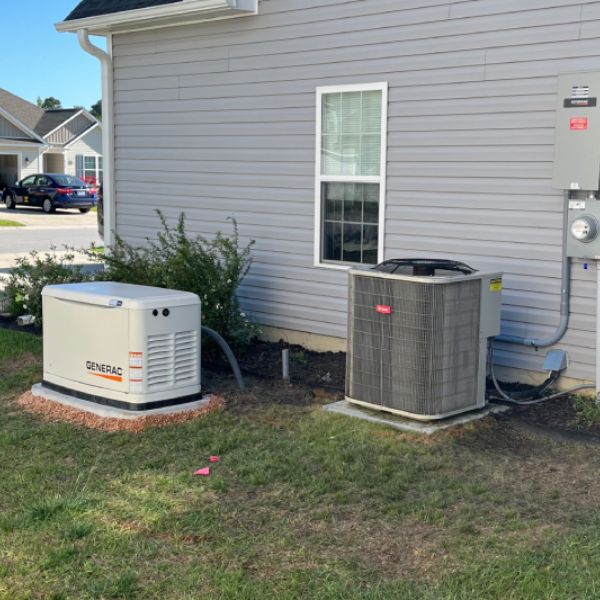
Standby units typically run on natural gas or propane. Propane suits many rural properties here, and tank size affects how long you can run before a refill.
Placement follows code. Clearances from windows, doors, and the structure all get dictated, and a licensed installer sizes the gas line so the unit gets the fuel it needs under load.
These systems also want periodic care to stay ready. A generator that sits untested for years is a gamble the night you need it, so proper installation and service is part of owning one, not an afterthought.
Getting It Right in Boerne
A generator is only as good as the sizing and the install behind it. The unit on the pad gets noticed, but the load calculation, the transfer switch, and the panel tie-in decide whether it does its job when the grid quits.
Texas Highlands Electric installs standby generators for homes across Boerne and the Hill Country, from sizing and transfer switch work to the panel upgrades that support them. The result is a system matched to your home rather than a number pulled from a brochure.
To find out what size fits your home and what it would keep running, contact Texas Highlands Electric for an assessment or a written quote. Better to plan it before the next outage than during one.