


28 Oct Barn Wiring Pipe Creek Owners Should Plan Around Voltage Drop
A barn a few hundred feet from the house sounds simple until you ask what has to travel that far. Good barn wiring Pipe Creek ranchers can count on accounts for the distance, the animals, and the weather, and the distance is where most plans go wrong.
How Far Can You Run Power To A Barn?
There’s no single maximum, because the real limit is voltage drop. Every foot of wire resists current, so voltage falls along the run, and it falls more as the distance and the load grow. At the barn end that shows up as dim lights, motors that run hot, and tools that struggle, even when the sub panel is sized perfectly. The fix is upsizing the conductors beyond what the breaker alone would call for, and we calculate the drop for the real distance and the real load before any wire goes in the ground.
Aluminum feeder suits long runs because it costs less per foot than copper at the larger sizes, and it’s safe when it’s terminated with the right lugs and compound. We use it where the distance makes it the sensible choice and copper where it doesn’t.
Properties around Pipe Creek, along Highway 16 and the FM 1283 side roads, often put the barn well back from the house. Bandera Electric Cooperative serves the area, and the meter marks where the co-op’s responsibility ends and the long feeder to your barn begins. Burial matters as much as wire size. Conduit goes in at code depth and rated for the ground it sits in, and we size the trench with a little spare capacity so a second bay or a lean-to doesn’t mean reopening it.
What A Livestock Barn Asks Of Wiring
Barn Loads
The loads are different from a shop’s: heat lamps in a birthing season, water heaters on troughs during a freeze, fans in July, and lighting on a schedule. Cold snaps put a lot of load on a barn at once, since trough heaters, heat lamps, and the well pump can all run for hours on the same night, and a feeder sized only for lighting will sag or trip. Each heater belongs on a GFCI protected circuit, since standing water and animals raise the stakes.
Damp And Dusty Conditions
A barn is damp, dusty, and sometimes corrosive from ammonia, and animals chew and rub on whatever they can reach. Wiring methods, boxes, and fixtures have to be rated for that environment, with GFCI protection where it’s required and cables kept out of reach. Lighting over the stalls and down the aisle should be rated for damp locations, with covers that won’t shatter, and fan motors and outlets need the same dust and moisture ratings.
Grounding And Stray Voltage
Animals notice stray voltage long before people do, so proper grounding and bonding inside the barn matters. A building out on open ground also takes lightning-driven surges, which makes surge protection at the sub panel cheap insurance for the lighting, fans, and controls.
The Sub Panel And Disconnect At The Barn
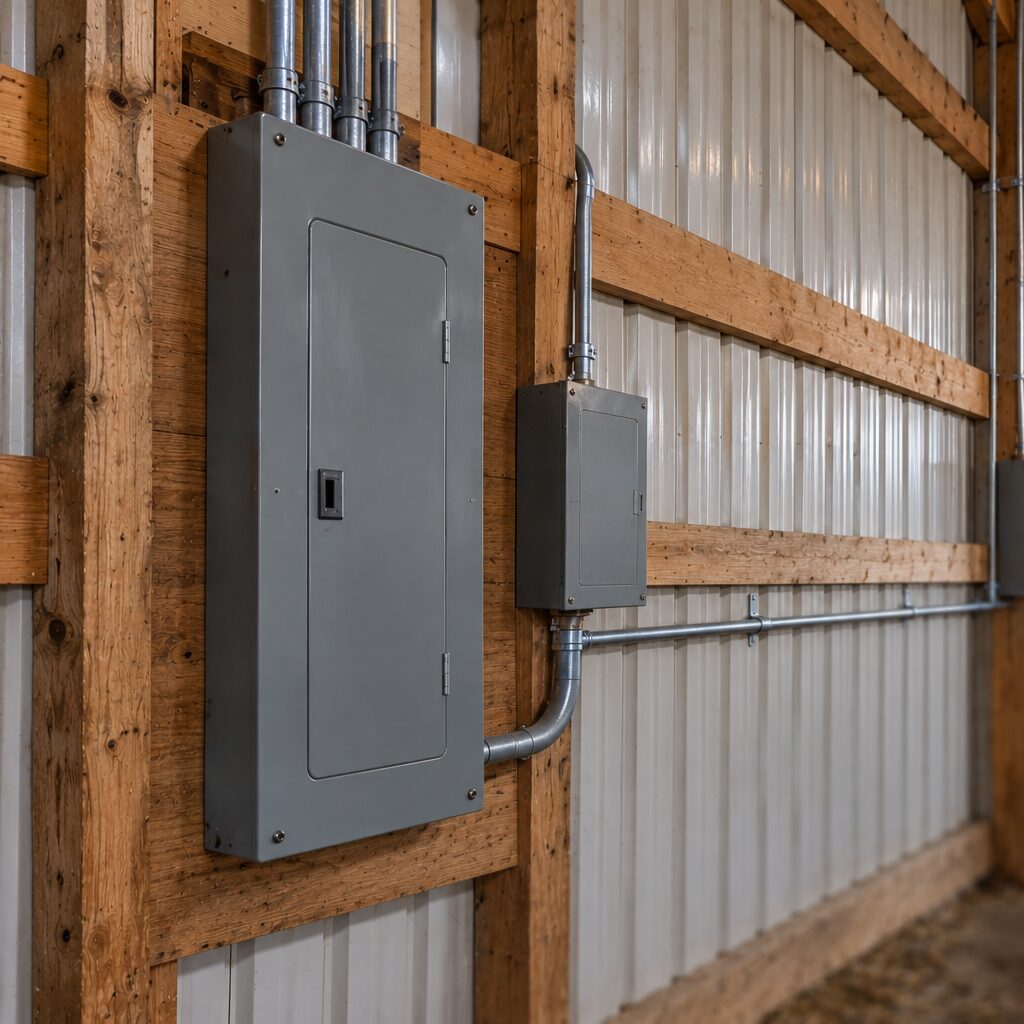
A dedicated sub panel inside the barn, fed by its own properly sized feeder, gives each circuit its own breaker, separate from what the house runs. A separate building also needs its own grounding electrode and disconnect, and a wire back to the house panel doesn’t cover it. The disconnect should sit where you can reach it quickly, away from the stalls. We leave a few open slots, since most owners add a circuit or two once the barn is wired right. If the main house panel is already crowded, we deal with that first, as we did on an EV charger project in Pipe Creek where capacity was the real question.
A combined barn and shop under one roof is common on smaller acreage, and it needs a load calculation that treats both uses honestly. Welders and compressors belong to a different conversation, which we cover in our post on shop and outbuilding wiring in Mountain Home.
Planning Barn Wiring Pipe Creek Projects Before The Trench Opens
The time to settle outlet placement, lighting, and dedicated circuits is before any wire goes in the ground. We ask what you’ll run in the barn, where the stalls, tack room, and equipment will sit, and how the property might grow, then size the feeder and sub panel around that. Permitting for a detached building varies with the scope of the project, and we handle the coordination and inspections ourselves. We test every circuit under real load before we call the job done, running the equipment you plan to use and confirming it all performs.
A site walk with a marked plan helps before the first shovel: flags where the feeder will run, where the sub panel mounts, and where water lines and fences cross the route. Marking those first keeps anyone from cutting a line nobody remembered.
See our construction and remodel wiring service and our construction wiring FAQs, then contact Texas Highlands Electric before you break ground.