
11 Nov Shavano Park EV Charger Costs Come From The Wiring
The charger itself is usually the smaller part of the project. For a Shavano Park EV charger, the work that sets the price is the wiring between your panel and the spot where you park, plus whether the panel has the capacity to carry another large load. Settle those two questions before you choose the hardware.
Shavano Park became its own city in 1956, and its homes range from long-established neighborhoods to newer builds. That mix means no two garages or panels are quite alike.
Distance From Panel To Parking Spot
A charger on the wall right beside the panel needs very little wire. A charger at the far end of a long garage, or in a detached garage, needs a longer run, and a long run may need heavier wire to keep voltage drop in check. If the wire has to cross a driveway or yard, trenching and conduit are part of the work.
Capacity In The Panel
A Level 2 charger draws as much power as a major appliance, and it can run for hours. Before wiring anything, we check the panel and the service to confirm they can carry it alongside everything else, including air conditioning. If the panel is crowded, the answer may be an upgrade or a device that limits the load.
Our Alamo Heights EV charger post explains how load management works in older homes.
Plug-In Or Hardwired
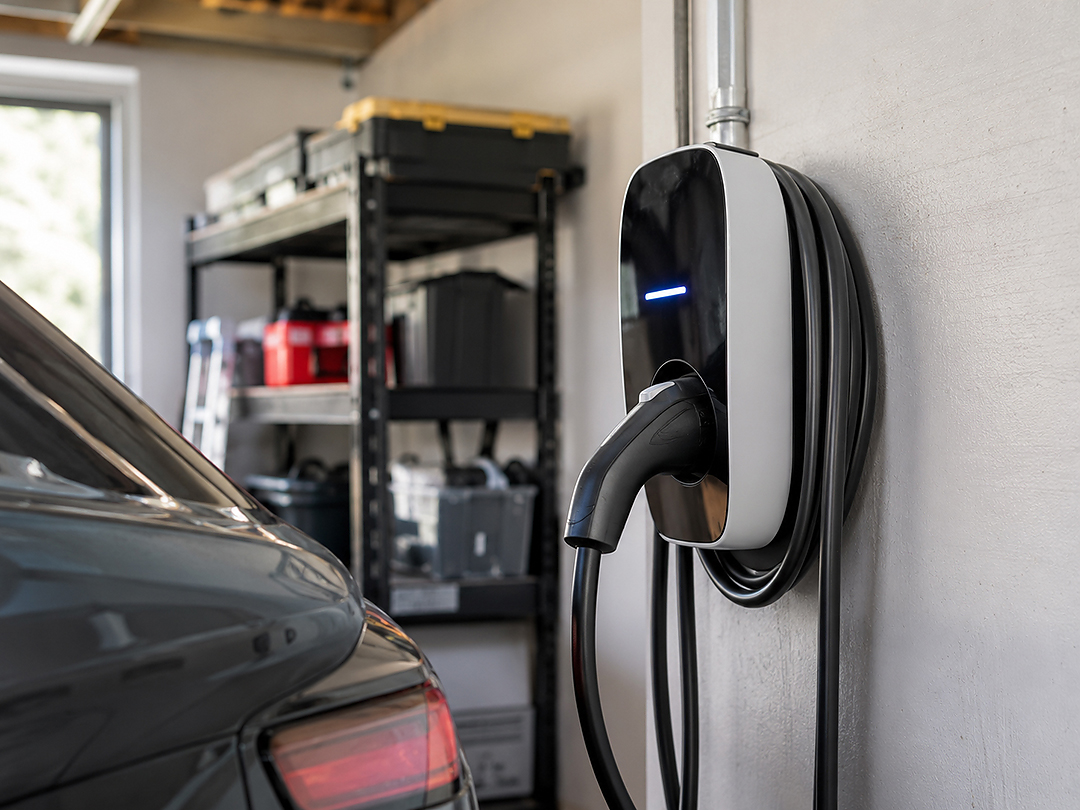
A plug-in charger connects to a dedicated 240-volt receptacle, often the same type used for a dryer or a range. A hardwired charger connects directly to the circuit. Plug-in is simple and portable, while hardwired suits higher-amperage chargers and gives a cleaner finish outdoors.
Either way, the charger is treated as a continuous load, which means the breaker and wire are sized larger than the charger’s rating. A 40-amp charger, for example, calls for a 50-amp circuit.
What Drives The Cost Of An EV Charger Installation
Wire length is the first factor, from the panel to the parking spot. Panel capacity is the second: if the panel is full or the service is near its limit, the job grows. The charger’s amperage sets the wire size and breaker. A trench for a detached garage or an outdoor post adds labour and material. Permit and inspection are part of every install.
Plug-in or hardwired is a smaller decision. A 240-volt receptacle costs a little less up front, and a hardwired unit avoids plug wear. Smart features add to the charger price, not the wiring. We quote the circuit at a flat rate after seeing the panel and the route.
Installing A Charger, Step By Step
We start with a walk from the panel to the parking spot and a load calculation. If the panel has room, we add a breaker. We run the wire in conduit or cable as the route requires, install the receptacle or the hardwire connection, and mount the charger at a height that suits the cable. The permit and inspection follow.
Once inspected, we test the charger with your vehicle and show you how it works and how to set schedules.
Mistakes People Make With Home Chargers
Buying the charger first and the wiring later is the common one. A charger that draws more than the panel can supply creates a problem. Using an extension cord with a charger is dangerous. Choosing a plug-in in a spot that sees weather without an enclosure rated for it leads to trouble. Another is skipping the permit.
Think about where you park, how often you charge, and whether a second EV is likely.
Choosing Where The Charger Goes
Think about where the charge port sits on your vehicle and how the cable reaches it. A charger on the side wall of a garage reaches most vehicles. Mounting it near the middle of the garage wall can serve either side. Outdoor chargers should be mounted where the cable doesn’t cross a walkway and where rain doesn’t pool.
If you may buy a second EV, run wire sized for two chargers or add a second circuit now. Parking habits matter too: if one car is always parked outside, a post-mounted charger can serve it. Our Alamo Heights EV charger post covers older garages with limited capacity, and EV charger installation in Fredericksburg shows another layout.
Shavano Park Homes And Panel Capacity
Shavano Park includes long-established neighborhoods and newer builds. Older panels may be smaller and fuller, while newer homes often have more room. An EV charger is a continuous load that runs for hours, so we check the panel’s spare capacity and the main service. Load management can help in a tight panel. See our Shavano Park page, the EV charger installation page, and the EV charger FAQs.
Tips For Charging At Home In The Hill Country
Hot summers and thunderstorms affect charging. Charging during off-peak hours on a schedule keeps the load off the panel during the hottest afternoons, when the air conditioner is working hardest. A surge protective device at the panel guards the charger and the vehicle’s charging electronics from storm-related spikes. Keep the charger and cable out of standing water, and replace a cable with a cracked jacket.
Think about outages too. A charger does not work without power, and many owners with well pumps or rural properties pair EV ownership with backup power. Our home generator installation in Bandera post covers the pump side of that picture.
Frequently Asked Questions
How Many Amps Does An EV Charger Need?
Common home chargers run at 32, 40, or 48 amps. The vehicle’s onboard charger sets the maximum it can accept.
Do I Need A 240-volt Outlet For A Level 2 Charger?
Yes. Level 2 uses 240 volts, either from a receptacle or a hardwired connection.
Can I Charge An EV From A Regular Outlet?
Yes, at a slow rate. It works for light use but is slow for daily driving.
Will My Panel Handle An EV Charger?
A load calculation answers it. Load management can help if the panel is tight.
Does A Charger Need Its Own Circuit?
Yes. It is a continuous load and gets a dedicated circuit.
Are There Rebates For Home EV Chargers?
Programs change. Ask your electric provider and check current offers.
How Do I Know If My Vehicle Needs A Hardwired Charger?
Check the vehicle’s maximum charging rate and the charger’s rating. Higher-amp chargers are usually hardwired. Smaller ones can run on a 240-volt receptacle.
What Happens If I Move And Take My Charger With Me?
A plug-in unit can come with you. A hardwired unit can be removed too, and the circuit stays for the next owner.
Should I Install A Charger Now If I Do Not Own An EV Yet?
Installing the circuit now is reasonable if you plan to buy one soon, since running wire is easier before a garage is finished or crowded. You can add the charger itself later. A conduit or a spare breaker space is a low-cost way to be ready, and we can quote the circuit at a flat rate so you can decide.
Can I Install A Charger In A Rented House?
Possibly, with the owner’s permission. A plug-in charger on a 240-volt receptacle is easier to take with you. Ask the owner before any wiring work, and use a licensed electrician.
Planning A Shavano Park EV Charger
Start with where you want to park and charge, and what vehicle you drive. We will check the panel and quote the circuit, and we can recommend a charger that works with it. Our EV charger installation page and EV charger FAQs explain the process, and our Shavano Park page shows where we work.
Reach out to Texas Highlands Electric and we will walk the route from your panel to your parking spot.