


08 Nov Interlock Or Transfer Switch For A Comfort Generator
The power goes out on a quiet evening in Comfort, the portable generator is in the shed, and the question is how to connect it to the house. Extension cords will run a few things. An interlock or transfer switch will run the house, and the choice between them comes down to how you want to use the generator.
Both options exist for the same reason: a generator must never feed power back onto the lines, where it can hurt a utility worker, and neither should it be connected to the house by a makeshift cable.
How An Interlock Works
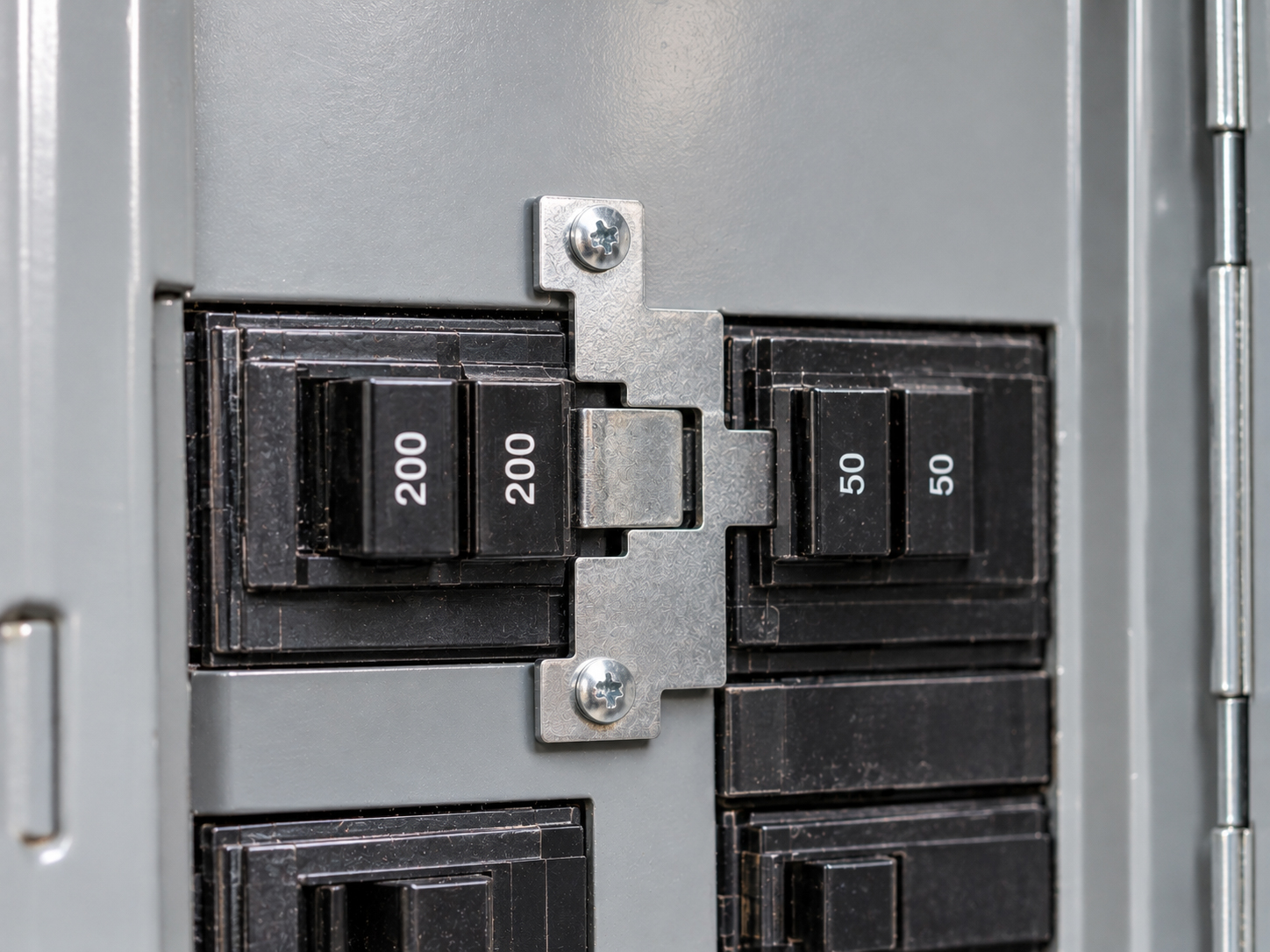
An interlock is a mechanical plate on the panel that lets either the main breaker or the generator breaker be on, but never both at once. The generator connects through an inlet box on the outside of the house and a dedicated breaker in the panel. When the power fails, you turn off the main, start the generator, plug in, and switch on the generator breaker.
Because it connects to the whole panel, an interlock gives you the flexibility to power any circuit. It also asks you to manage the load, since the generator can only carry so much.
How A Transfer Switch Works
A transfer switch is a small separate panel that holds the circuits you choose to power from the generator, such as the refrigerator, the well pump, some lights, and the furnace fan. A switch moves those circuits between the utility and the generator, and it cannot connect to both at once. A manual version is flipped by hand, and an automatic version, used with standby generators, does it on its own.
Because only selected circuits are on the switch, the load is limited and predictable. The tradeoff is that circuits not on the switch stay off.
Interlock Or Transfer Switch For A Comfort Home
If you own a portable generator and want a lower-cost way to run a good part of the house, an interlock is a common choice. If you want a defined list of circuits and the generator sized to match, or if you have a standby generator, a transfer switch is the better fit. Homes on wells, with freezers, or with medical equipment often benefit from the defined circuit list.
Our generator installation page explains how we plan either setup.
Cost And Complexity Compared
An interlock is a simpler installation, with fewer parts, and it usually costs less. A transfer switch involves a second panel and moving circuits to it, which takes more labor. The right comparison is not only price. It includes what each setup does for you during an outage and how much you want to manage by hand.
Mistakes We See
The riskiest is a homemade cable with a plug on each end, used to feed the generator’s power into a wall outlet. That sends power backward onto the house wiring and the lines. Others include a generator too small for the well pump’s starting surge and a generator placed too close to a window. A proper connection avoids all three.
What You Will Need Either Way
Both options require a permit and an inspection, and the work has to be done by a licensed electrician. Both require the generator to be sized for the loads you plan to run, including the surge when a well pump or air conditioner starts. Both require the generator to be placed outdoors, away from windows and doors, to keep exhaust out of the house.
See what a standby generator powers and sizing a standby generator for how the sizing questions work.
What Affects The Cost Of Connecting A Generator
An interlock is a simpler job with fewer parts, so it usually costs less. A manual transfer switch adds a second panel and means moving selected circuits to it. An automatic transfer switch for a standby generator adds controls and wiring. The distance from the generator to the panel, the size of the service, and the number of circuits all matter.
Permits and inspection apply to each. The generator itself is a separate purchase. We price each option for your house at a flat rate once we’ve seen the panel and talked about what you want to run.
Setting It Up, Step By Step
We start by choosing where the generator will sit, outdoors and away from windows and doors. An inlet box goes on the wall outside, wired to the panel. With an interlock, we install the plate and a dedicated breaker. With a transfer switch, we set the panel next to the main and move chosen circuits to it.
After the permit and the inspection, we test the system with the generator running under load. You get instructions for operating it safely and for the order in which to switch things.
Interlock And Transfer Switch, Side By Side
An interlock uses the main panel. The generator connects through an inlet box and a dedicated breaker, and a plate on the panel prevents the main and the generator breakers from being on at the same time. You decide which circuits to run by switching breakers on and off. It’s flexible, and it asks you to watch the load.
A transfer switch sets a smaller panel beside the main, holding only the circuits you choose to back up. A switch moves those circuits from the utility to the generator. The load is limited by design, which protects the generator from overload. Circuits that are not on the switch stay off during an outage.
Both need a permit and an inspection. Both keep power from feeding back onto the lines. For a home with a well, a freezer, and a furnace, a transfer switch gives a clear, simple setup. For an owner who wants more flexibility, an interlock can suit. Our generator installation page explains what we install, and what a standby generator powers helps with sizing.
Frequently Asked Questions
Is It Legal To Connect A Portable Generator To My House?
Yes, when it is done through a properly installed inlet and an interlock or transfer switch, with a permit and an inspection.
Can I Power My Whole House With A Portable Generator?
Usually not. Most portable generators run selected loads, and you manage the rest. Size matters.
What Size Generator Do I Need?
It depends on the starting and running loads. We add them up for your house.
Do I Need To Tell My Electric Provider About My Generator?
Ask your provider about its requirements. A proper transfer switch or interlock keeps power from feeding the lines.
Can I Just Use A Cord And Plug It Into A Dryer Outlet?
No. That sends power backward through the house wiring and the lines and is dangerous.
How Often Should I Test The Generator Connection?
A few times a year, and before storm or winter seasons.
Can An Interlock Overload My Generator?
Yes, if you turn on too many circuits. You manage the load by switching breakers, so know your generator’s capacity and what each circuit draws.
Which Is Easier To Use During An Outage, An Interlock Or A Transfer Switch?
A transfer switch is simpler once installed, since you flip one switch. An interlock asks you to follow a sequence and manage breakers. Either can be learned with a practice run.
Planning It For Your House
See our Comfort page for the area we serve. Contact Texas Highlands Electric and tell us what you want the generator to run, and we will recommend the connection that suits it.